August was an unusual month in the garden this year. The main gardener (me) was indisposed, the vegetables were sulking (or being eaten by woodchucks), the flower borders look nice enough, until you look closely and realize that crabgrass has invaded the edges and editing is highly necessary.
My gardening companion, totally focused on finishing a book project, has been rather desultory in his mowing of our remaining lawn, encouraged by periodic rains (uh, I don't know how to run the riding lawn mower, thankfully). But he has 'edited' the front meadow, cleaned up a lot of fallen branches, and probably done a lot more that I know.
But our garden definitely shows the absence of our attention.
I remembered recently that I had added a visit to our garden (aka 'home landscape') at the end of a natural gardening program in mid-October for our (Clemson University) Osher Lifelong Learning Institute program.
This was late spring madness, to be sure. I know the garden was lovely then, but what was I thinking!
Thank goodness for gardeners, there's always the next season.
Monday, August 31, 2009
Saturday, August 29, 2009
Mexican hyssop
I'm quite fond of hyssops (Agastache spp). 
Southwestern U.S. and Mexican natives, they include all sorts of delightful plants that are well-suited to our often droughty summers.
Hummingbirds like to visit their flowers, and they're drought-tolerant, which first got me interested in them , but their variety of forms and flower shapes is equally entrancing.
I planted Mexican hyssop (Agastache mexicana) in an oak half-barrel near the porch early in the summer. The hummingbirds have been enjoying it.

Southwestern U.S. and Mexican natives, they include all sorts of delightful plants that are well-suited to our often droughty summers.
Hummingbirds like to visit their flowers, and they're drought-tolerant, which first got me interested in them , but their variety of forms and flower shapes is equally entrancing.
I planted Mexican hyssop (Agastache mexicana) in an oak half-barrel near the porch early in the summer. The hummingbirds have been enjoying it.
Labels:
Agastache,
hummingbirds,
Mexican hyssop,
natural gardening
Thursday, August 27, 2009
Bird feeders
I arrived in the mountains this afternoon on a quick overnight trip, to find goldfinches inhaling seeds from the thistle feeders. They had been absent last weekend (we'd brought the feeders in after our last visit). But they were avidly consuming seeds today.
The sunflower feeder was horizontal, presumably knocked over by a racoon or an opposum or wind (I don't think the young bear has made a reappearance).
I filled it up (at least temporarily) and the cardinals made a rapid reappearance.
The sunflower feeder was horizontal, presumably knocked over by a racoon or an opposum or wind (I don't think the young bear has made a reappearance).
I filled it up (at least temporarily) and the cardinals made a rapid reappearance.
Labels:
bird feeders,
natural gardening
Wednesday, August 26, 2009
A hummingbird visit
Outside my office window today, I saw a female hummingbird hovering. She stayed quite a long time (at least for a hummingbird), moving around.
I think she saw her reflection, and was wondering 'who the heck was that?'
Ruby-throated hummingbirds are keenly defending their territories now, as they prepare to head south for the winter, and I suppose, wanting to load up on energy.
I think she saw her reflection, and was wondering 'who the heck was that?'
Ruby-throated hummingbirds are keenly defending their territories now, as they prepare to head south for the winter, and I suppose, wanting to load up on energy.
Monday, August 24, 2009
More hummingbirds
There are at least three, maybe four, hummingbirds whizzing around the garden right now. They're all females, but they still fuss over the feeders and delight us with their chirps and buzzes. They'll probably be around a bit longer, and their brethren will be coming through until early October.
Nectar is an important part of their diet, but equally important are the small insects they glean. The leaves of the old Southern red oaks near the house, which harbor lots of such insects, are a favorite foraging ground.
Campsis radicans (featured in yesterday's post) is a particularly important source of nectar here in the Eastern U.S. Perfectly adapted to its primary pollinator, it depends on frequent visitation (by ruby-throated hummingbirds) for pollination and good seed set.
Nectar is an important part of their diet, but equally important are the small insects they glean. The leaves of the old Southern red oaks near the house, which harbor lots of such insects, are a favorite foraging ground.
Campsis radicans (featured in yesterday's post) is a particularly important source of nectar here in the Eastern U.S. Perfectly adapted to its primary pollinator, it depends on frequent visitation (by ruby-throated hummingbirds) for pollination and good seed set.
Sunday, August 23, 2009
Hummingbirds and Campsis flowers
Trumpet creeper (Campsis radicans) is a great native vine with beautiful tubular orange flowers, but often disparaged because of its strong vining habit (read fast-growing).
A venerable ~100 year specimen at Biltmore Estate, in Asheville, NC has been carefully trained to cover a large arbor to the left of the house.

Much to our delight, a female hummingbird well-used to human visitors, was busily foraging in open flowers, close enough to get some nice shots with the help of the 18-200 lens. (Click on the photos for a better look!)
Friday, August 21, 2009
Sowing lettuce, spinach, and mustards
I managed to do a first sowing of mixed mustards, lettuces, arugula, and spinach today. I even poked some nasturtium seeds around the beds, hoping to have a few flowers before frost.
Normally, I'd have started a bit earlier with my flats, but heat and dry weather (and recovery time) has kept me inside most of this month. We've had some rain and mild weather, though, the last few days, so it's a good time to make the effort.
There's plenty of time for fall greens, to be sure, and I'll be doing successive sowings in flats through late September.
I'm also planning to use my cold frame for season extension this year, too, and may even use a second makeshift coldframe with extra hay bales from my straw bale experiment. The straw bales have matured wonderfully well, and is a technique that I'll probably try again, although my experimental results were hindered by woodchuck foraging.
I'm not sure whether I'll be able to do the bed prep in time to plant many other fall crops, but I'm hoping to be able to pull the last early tomatoes next week, and sow some beets, chard, carrots, turnips, radishes, and transplant collards, broccoli, and brussel sprouts. I'm a bit reluctant to put them down in the satellite garden (a prime woodchuck foraging area) though -- I might as well just feed him/her directly! A fellow gardener suggested apples as a good bait -- it's worth a try.
Normally, I'd have started a bit earlier with my flats, but heat and dry weather (and recovery time) has kept me inside most of this month. We've had some rain and mild weather, though, the last few days, so it's a good time to make the effort.
There's plenty of time for fall greens, to be sure, and I'll be doing successive sowings in flats through late September.
I'm also planning to use my cold frame for season extension this year, too, and may even use a second makeshift coldframe with extra hay bales from my straw bale experiment. The straw bales have matured wonderfully well, and is a technique that I'll probably try again, although my experimental results were hindered by woodchuck foraging.
I'm not sure whether I'll be able to do the bed prep in time to plant many other fall crops, but I'm hoping to be able to pull the last early tomatoes next week, and sow some beets, chard, carrots, turnips, radishes, and transplant collards, broccoli, and brussel sprouts. I'm a bit reluctant to put them down in the satellite garden (a prime woodchuck foraging area) though -- I might as well just feed him/her directly! A fellow gardener suggested apples as a good bait -- it's worth a try.
Labels:
fall greens,
mustards,
sowing lettuce,
sowing spinach
Thursday, August 20, 2009
Young leeks
I'd never grown leeks before, but was fascinated that one of our main vegetable commercial growers (in the US) was providing them to the garden centers of big box stores (Lowes and Home Depot) as well as to independent feed and seed stores.
I bought a pot full of MANY small leek seedlings this spring, and struggled to separate out the tiny seedlings. I transplanted some to containers, some to places in the garden, and then ran out of steam (they were very small seedlings).
But I harvested a young leek today, just to check on their progress. (I didn't follow regular leek protocol for our region of sowing seeds in early fall, but obviously this seed/transplant company didn't either.)
Hooray. It was tender and nice. Tomatoes, peppers, red cabbage, and squash were also from my (neglected) garden.
I bought a pot full of MANY small leek seedlings this spring, and struggled to separate out the tiny seedlings. I transplanted some to containers, some to places in the garden, and then ran out of steam (they were very small seedlings).But I harvested a young leek today, just to check on their progress. (I didn't follow regular leek protocol for our region of sowing seeds in early fall, but obviously this seed/transplant company didn't either.)
Hooray. It was tender and nice. Tomatoes, peppers, red cabbage, and squash were also from my (neglected) garden.
Labels:
Corno di Toro peppers,
leeks,
natural gardening,
squash
Wednesday, August 19, 2009
Planting a fall garden
My e-newsletters have been touting planting a 'second' garden lately (Renee's Garden, Vegetable Gardener (Fine Gardening/Tauton Press), and the Tasteful Garden (a family-owned nursery in Alabama). I loved this piece (also on Vegetable Gardener) from Kitchen Gardens magazine archives on cold frames by Elliot Coleman. Geez, thanks to Elliot Coleman, I'm promoting growing vegetables year-round here in South Carolina. At least three seasons!
One of the nicest things about the Vegetable Gardener e-newsletter is that they're providing archival material from KitchenGardener magazine. I had subscribed, years ago, just before it stopped publication, and there is great information to be gleaned from their archives.
Happily, growing vegetables is a subject that doesn't change a great deal; we add new vegetables, extend the seasons, and grow organic, but it's still about improving the soil, plant nutrients, and water.
I was delighted to have a nice group in a Fall Vegetable Gardening workshop this morning. And I'm looking towards fall in my own garden, to be sure, after a bit of an August respite (probably for the best) defined by having to lounge around to recover from minor surgery. Hhrrmph.
I'm going to be sowing seeds of kale, lettuce, collards, and mesclun mix tomorrow in flats and containers. Chard, beets, carrots, chard, spinach, borage, mache (corn salad), dill, fennel, leeks, and cilantro won't be far behind.
What fun.
One of the nicest things about the Vegetable Gardener e-newsletter is that they're providing archival material from KitchenGardener magazine. I had subscribed, years ago, just before it stopped publication, and there is great information to be gleaned from their archives.
Happily, growing vegetables is a subject that doesn't change a great deal; we add new vegetables, extend the seasons, and grow organic, but it's still about improving the soil, plant nutrients, and water.
I was delighted to have a nice group in a Fall Vegetable Gardening workshop this morning. And I'm looking towards fall in my own garden, to be sure, after a bit of an August respite (probably for the best) defined by having to lounge around to recover from minor surgery. Hhrrmph.
I'm going to be sowing seeds of kale, lettuce, collards, and mesclun mix tomorrow in flats and containers. Chard, beets, carrots, chard, spinach, borage, mache (corn salad), dill, fennel, leeks, and cilantro won't be far behind.
What fun.
Tuesday, August 18, 2009
Barred Owls
Barred owls were calling in the neighborhood forest early this morning. They were a bit raucous, almost like a couple of juveniles fussing at each other, as their calls were truncated, and not the usual 'who-cooks-for-you' call at all.
I just heard them briefly, after my gardening companion, coming in after throwing a ball for our gardening assistant (aka 'the bear dog') said, 'quick, come hear the owls.'
A gift, and it reminded me of seeing a young barred owl in a nearby tree several years ago, practically outside my study window.
I just heard them briefly, after my gardening companion, coming in after throwing a ball for our gardening assistant (aka 'the bear dog') said, 'quick, come hear the owls.'
A gift, and it reminded me of seeing a young barred owl in a nearby tree several years ago, practically outside my study window.
Labels:
barred owls,
natural gardening
Sunday, August 16, 2009
Peppers, tomatoes, and eggplant
This evening's harvest yielded Corno di Toro peppers, a poblano pepper, 'Holy Mole' peppers, various tomatoes, and Lao and Thai eggplants.
It's just about the last of the spring-planted tomatoes at this point. Maybe I should have been giving them more TLC with compost and organic fertilizer, but I've been distracted. The rains basically stopped over six weeks ago, so production has depended on watering.
The mid-summer plantings of squash and tomatoes are looking good, and it's almost time to sow greens!
It's just about the last of the spring-planted tomatoes at this point. Maybe I should have been giving them more TLC with compost and organic fertilizer, but I've been distracted. The rains basically stopped over six weeks ago, so production has depended on watering.The mid-summer plantings of squash and tomatoes are looking good, and it's almost time to sow greens!
Friday, August 14, 2009
Mid-August vegetable gardens
In warm climates, at least, our mid-to-late summer vegetable gardens look stressed and tired (if they haven't totally pooped out). This year, I can add our perennial gardens, shrub borders, and small trees, too. The old dogwoods are looking quite puny.
Not for us are the vibrant bounty of cooler summer places. But we've usually had a good run through spring and early summer, and we can look forward to fall greens.
And (for me) being out-of-pocket (at least as far as the garden has been concerned) hasn't helped either. Not bending over for several weeks (as a minor surgery recovery mandate) is NOT a good thing.
Thankfully, I have some midsummer tomatoes and late squash sowings that are still productive. And it's easy to harvest them with a quick bend of the knees!
Not for us are the vibrant bounty of cooler summer places. But we've usually had a good run through spring and early summer, and we can look forward to fall greens.
And (for me) being out-of-pocket (at least as far as the garden has been concerned) hasn't helped either. Not bending over for several weeks (as a minor surgery recovery mandate) is NOT a good thing.
Thankfully, I have some midsummer tomatoes and late squash sowings that are still productive. And it's easy to harvest them with a quick bend of the knees!
Labels:
midsummer garden,
natural gardening
Thursday, August 13, 2009
Growing basil easily
Last summer, I first tried growing basil in flats. It was a smashing success. Harvested often, I had lots of tender leaves to use in pesto and for flavoring. In contrast, the plants in the ground had their usual tough leaves, etc., although bees and other visitors enjoyed the flowers.
So this year, I duplicated the method. Fabulous, again. These flats are the multi-harvested one on the right, and the newly sown one on the left.
Labels:
basil,
easy basil,
growing basil,
natural gardening
Wednesday, August 12, 2009
Rain in the mountains
It poured yesterday. Lots of rain. Our small bog will be happy, as will the sedum garden.
It looked like a tropical rain forest.
Labels:
abundant rain,
more rain,
natural gardening,
rain
An exuberance of flowers
A neighbor's garden (in the mountains) is in full bloom. It's a bit eclectic, and was a bit jarring in its colors early in the season, but now, it's quite delightful. (Do click on the photo for a larger view).

They planted their front garden this spring, but have kept adding along the way. (Their much younger neighbors told us that it makes them tired to watch - but hopefully, it'll be an inspiration).
Now, in mid to late summer, it looks lovely. And this is a (very) part-time garden, as the gardeners live elsewhere for much of the time.
It reflects the beauty of old standards (the zinnias and Shasta daisies) as well as perennial sunflowers, shrub roses, and others.

They planted their front garden this spring, but have kept adding along the way. (Their much younger neighbors told us that it makes them tired to watch - but hopefully, it'll be an inspiration).
Now, in mid to late summer, it looks lovely. And this is a (very) part-time garden, as the gardeners live elsewhere for much of the time.
It reflects the beauty of old standards (the zinnias and Shasta daisies) as well as perennial sunflowers, shrub roses, and others.
Labels:
natural gardening,
perennial gardens
Tuesday, August 11, 2009
A summer bouquet

These summer flowers came from a local farmer's market here in the mountains. They're a mixture of native wildflowers (purple coneflower, phlox, and some sort of native grass) and horticultural favorites (Caryopteris, Scabiosa, and Buddleia).
An enforced hiatus from my garden for some minor surgery has me enjoying the pleasures of wildflowers in a bouquet.
Labels:
natural gardening,
summer wildflowers
Monday, August 10, 2009
Looking towards fall
It's hardly mid-August, but I'm thinking about fall vegetables. Will I have time to plant fall greens after a bit of a hiccup away from my garden? What about transplanting broccoli or brussels sprouts?
What should I recommend to folks next week in a Fall Vegetable Gardening class?
I'm looking forward to fresh lettuce and spinach, maybe some peas, and Asian greens like mizuna, pac choi, and mustards.
And, of course, I'm hoping that I'll still be harvesting some warm-season vegetables, too.
What should I recommend to folks next week in a Fall Vegetable Gardening class?
I'm looking forward to fresh lettuce and spinach, maybe some peas, and Asian greens like mizuna, pac choi, and mustards.
And, of course, I'm hoping that I'll still be harvesting some warm-season vegetables, too.
Sunday, August 9, 2009
Well-dressed Roman dogs
I was reminded of these dapper 'fellows' on the Spanish steps, in Rome last winter break, while poking around my photo archives last night.I mentioned them to my gardening companion (the photographer) this afternoon and he didn't remember them. Hmm.

They were quite striking.
Morning light
Early in the morning, as the sun moves higher, it illuminates a small area near the seasonal creek in the woods behind our small house in the mountains.The golden light was striking this morning.
Of course, the camera doesn't see it quite the way I did.
But the morning light is one of the things I enjoy here, looking out into the forest.
Labels:
natural gardening
Saturday, August 8, 2009
Rosehips

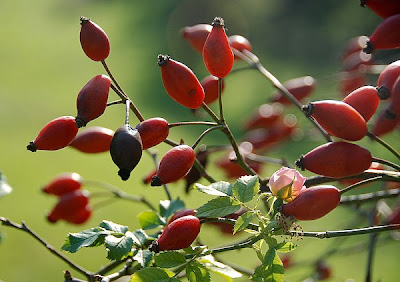
This is a remembrance from last winter's travels: rosehips on the grounds of Pompeii. I love the especially large fruits of shrub roses. and these were lovely in the morning light.
Labels:
natural gardening,
Pompeii,
rosehips
Wednesday, August 5, 2009
Sedum garden
Our small sedum garden is doing wonderfully well. In the mountains, afternoon thunderstorms have returned, bringing plenty of soaking rains.
Labels:
natural gardening,
Sedums
Monday, August 3, 2009
Vegetable gardening successes and failures
Every year is different. Some vegetables (and varieties) do well some years, and others are challenged.
I've had lots of tomatoes this year, thanks to abundant spring rains, but largely of a few varieties. Thank goodness for sturdy hybrids that happily produce faced with the usual tomato diseases.
My second round of plantings (from tip cuttings) are doing well, too, along with heirloom tomato plants growing in pots (in nice disease-free soil, of course). The second round of squash is flourishing, too, although between squash vine borers and woodchuck herbivory, the early plantings are just about gone.
I've left the winter squash and tromboncino squash growing in the satellite garden (maybe they'll outgrow the woodchucks?). The tomatoes look good, maybe the eggplants will produce some non-bitter fruits (some of them have been truly nasty), and maybe the yard-long beans will shake off the aphids, which have been a major garden pest this year.
I've had lots of tomatoes this year, thanks to abundant spring rains, but largely of a few varieties. Thank goodness for sturdy hybrids that happily produce faced with the usual tomato diseases.
My second round of plantings (from tip cuttings) are doing well, too, along with heirloom tomato plants growing in pots (in nice disease-free soil, of course). The second round of squash is flourishing, too, although between squash vine borers and woodchuck herbivory, the early plantings are just about gone.
I've left the winter squash and tromboncino squash growing in the satellite garden (maybe they'll outgrow the woodchucks?). The tomatoes look good, maybe the eggplants will produce some non-bitter fruits (some of them have been truly nasty), and maybe the yard-long beans will shake off the aphids, which have been a major garden pest this year.
Sunday, August 2, 2009
Asian tiger mosquitoes
When we first moved here in 1993, we didn't have many mosquitoes. Our house is on a gentle hill, and there's not any standing water nearby, so our native mosquitoes weren't a problem.
The advent of Asian tiger mosquitoes, however, as a problem throughout the Southeast has changed that. These mosquitoes are day-fliers, unlike our native mosquitoes, and can breed in damp soil, moistened by relatively small amounts of rain (think damp mulch) or in plant saucers, pot edges, etc. and love to hang around vegetation. Their bite stings quite a bit initially, but doesn't (yet) produce the itchy welts that native mosquitoes do.
Deet-based repellents are effective, but it's so unpleasant to spray just for a brief garden check, I find it hard to do that, unless I'll be out there for awhile.
This photo (from an excellent article about mosquitoes in National Geographic) shows the distinctive markings of the Tiger mosquito.
I'm thinking I need to get rid of ALL the empty pots, broken dishes, etc. that are behind the potting bench; they don't harbor standing water, but certainly could have a few tablespoons of moisture available on a saucer edge. Even the rimmed edges of traditional hanging baskets are probably enough to support their reproduction.
An article in NC Wildlife magazine first alerted me to their advance, as we wondered why we had started being bothered by mosquitoes.
The advent of Asian tiger mosquitoes, however, as a problem throughout the Southeast has changed that. These mosquitoes are day-fliers, unlike our native mosquitoes, and can breed in damp soil, moistened by relatively small amounts of rain (think damp mulch) or in plant saucers, pot edges, etc. and love to hang around vegetation. Their bite stings quite a bit initially, but doesn't (yet) produce the itchy welts that native mosquitoes do.Deet-based repellents are effective, but it's so unpleasant to spray just for a brief garden check, I find it hard to do that, unless I'll be out there for awhile.
This photo (from an excellent article about mosquitoes in National Geographic) shows the distinctive markings of the Tiger mosquito.
I'm thinking I need to get rid of ALL the empty pots, broken dishes, etc. that are behind the potting bench; they don't harbor standing water, but certainly could have a few tablespoons of moisture available on a saucer edge. Even the rimmed edges of traditional hanging baskets are probably enough to support their reproduction.
An article in NC Wildlife magazine first alerted me to their advance, as we wondered why we had started being bothered by mosquitoes.
Saturday, August 1, 2009
Succession plantings for vegetables
Those of us in warm climates have LONG gardening seasons, and fall vegetable gardens do wonderfully well, with the hardiest kales and cabbages overwintering for spring harvest. Often winter varieties of lettuce and spinach overwinter, too, providing a head start on late winter and early spring growth.
It's hard to imagine on a hot, humid August day, when parched plants are grateful for the hose.
My second round of squash and tomatoes are doing well, although the dry weather is encouraging powdery mildew on squash leaves.
Not surprisingly, the root-knot nematodes problems in the main vegetable garden weren't vanquished by the supposed predatory nematodes, but I did get quite a few squash and beans from early plantings before they went into decline (and show the definite knobby galls of root-knot nematodes on their roots).
But fall is not far away, and I'm thinking about the different varieties of kale, spinach, and lettuce (as well as beets, chard, and turnips) to sow in the coming weeks. And maybe I'll put in a round of fall edible flowers: calendula, borage, nasturtiums, and violas.
This time of the year is definitely trying for Southern gardeners. A friend who writes the weekly garden column in our main regional newspaper had a great piece today that describes our August gardening dilemmas. It's hot, it's humid, and we need to be out there early in the morning or in the evening. And those darn Asian mosquitoes that have invaded the Southeast in recent years are really annoying (they fly all day long and reproduce in a drop of water). So even those of us who never had mosquitoes before have these, making repellents (however nasty) an unfortunate necessity.
It's hard to imagine on a hot, humid August day, when parched plants are grateful for the hose.
My second round of squash and tomatoes are doing well, although the dry weather is encouraging powdery mildew on squash leaves.
Not surprisingly, the root-knot nematodes problems in the main vegetable garden weren't vanquished by the supposed predatory nematodes, but I did get quite a few squash and beans from early plantings before they went into decline (and show the definite knobby galls of root-knot nematodes on their roots).
But fall is not far away, and I'm thinking about the different varieties of kale, spinach, and lettuce (as well as beets, chard, and turnips) to sow in the coming weeks. And maybe I'll put in a round of fall edible flowers: calendula, borage, nasturtiums, and violas.
This time of the year is definitely trying for Southern gardeners. A friend who writes the weekly garden column in our main regional newspaper had a great piece today that describes our August gardening dilemmas. It's hot, it's humid, and we need to be out there early in the morning or in the evening. And those darn Asian mosquitoes that have invaded the Southeast in recent years are really annoying (they fly all day long and reproduce in a drop of water). So even those of us who never had mosquitoes before have these, making repellents (however nasty) an unfortunate necessity.
Subscribe to:
Posts (Atom)